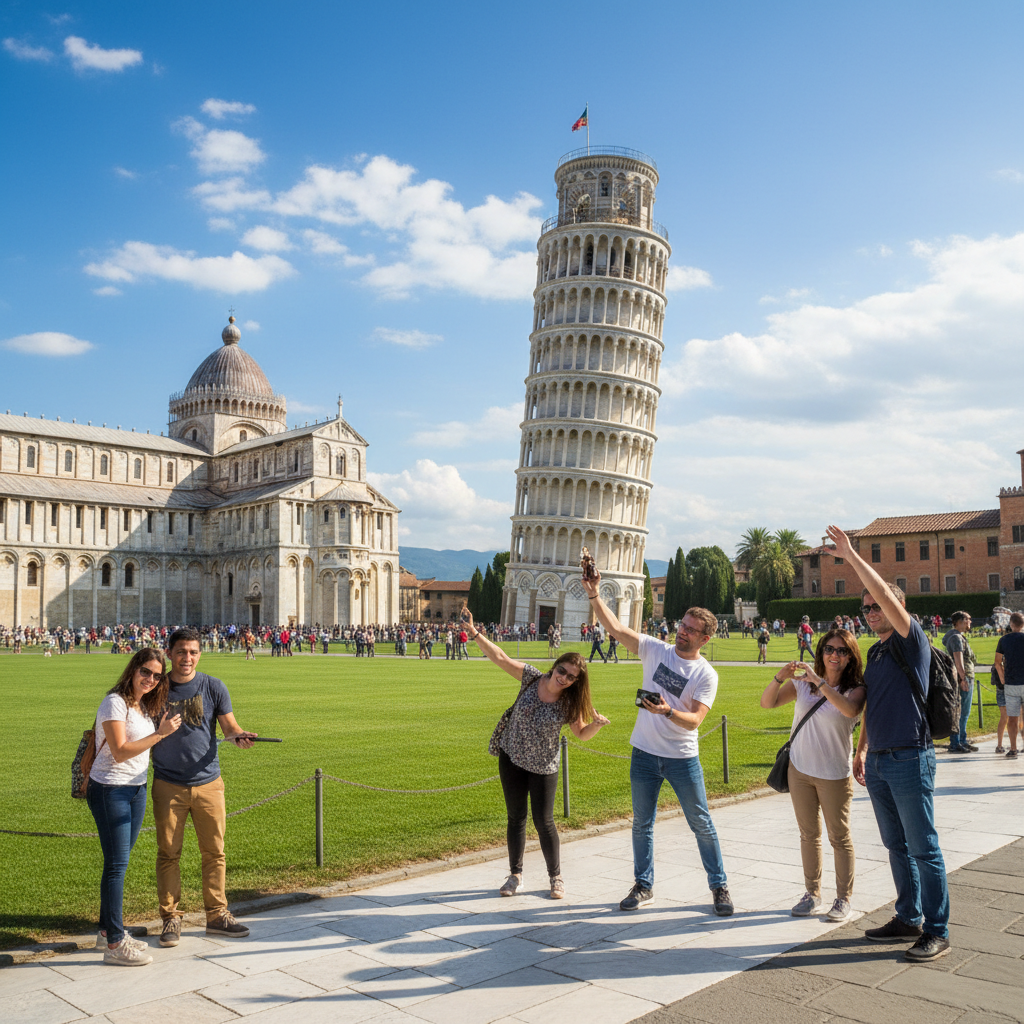
The Tale of the Leaning Tower of Pisa
The Leaning Tower of Pisa, an iconic symbol of Italy, has been drawing tourists for centuries due to its unintended tilt. Construction of the tower began in 1173 and continued over 199 years, with multiple architects contributing to its design. The structure was initially intended to be a freestanding bell tower for the adjacent cathedral in Pisa.
However, the soil beneath the tower proved unstable from the outset. When construction reached the third level, the tower began to lean due to inadequate foundation support in the soft, marshy ground. Instead of correcting the error, builders continued construction, adjusting the upper levels to compensate for the tilt. The final design of the tower culminated in 1372, achieving a height of 56 meters. Despite its precarious position, the tower is renowned for its stunning marble architecture and intricate details.
Over the centuries, numerous engineering attempts were made to stabilize the tower, especially as its lean increased. A significant restoration project undertaken between 1990 and 2001 employed innovative techniques, including lead weights and ground injections to stabilize the foundation. Remarkably, the tower was ultimately stabilized, reducing its lean and ensuring its safety for visitors.
Today, the Leaning Tower of Pisa is not only a UNESCO World Heritage site but also a focal point for discussions on architectural engineering and historical preservation. It remains a testament to human resilience and creativity. Millions flock to take photos pretending to hold up the iconic tilt—a charming symbol of Italy’s architectural splendor and a lesson in the importance of maintaining structural integrity.