The Great Depression's Lessons
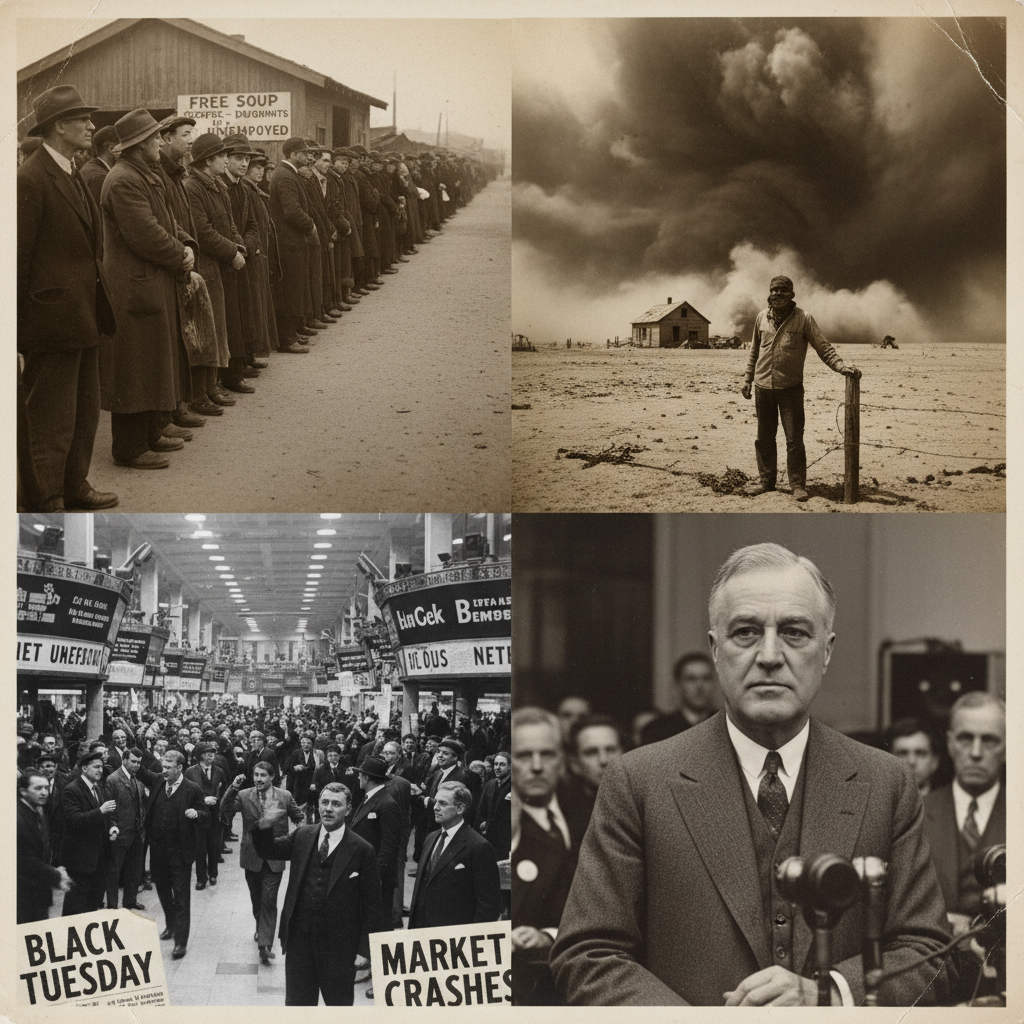
The Great Depression, which spanned from 1929 to the late 1930s, was a seismic event in history that reshaped economies and government policies around the globe. Triggered by the stock market crash of October 1929, it marked the most severe and longest-lasting economic downturn in the history of the industrialized world. Its repercussions were felt in multiple countries, affecting millions through mass unemployment, disordered financial systems, and widespread poverty.
Historically, the Great Depression is remembered for its drastic impact on society. In the United States, unemployment rates soared to around 25% at the peak of the crisis, while banks failed in staggering numbers, wiping out savings for many American families. The Dust Bowl in the Midwest compounded these struggles, as farms failed and entire communities were displaced. This humanitarian crisis forced the government to respond in unprecedented ways. The New Deal, introduced by President Franklin D. Roosevelt, aimed to provide relief, recovery, and reform, marking a significant shift in the role of government in the economy and initiating long-lasting changes.
The socio-economic failures during this era reveal important lessons about regulatory oversight. The lack of adequate regulatory systems and practices allowed rampant speculation in the stock market, ultimately leading to its abrupt collapse. In response to the lessons learned, subsequent financial regulations came to fruition, including the establishment of securities laws and the creation of Social Security, aimed at protecting citizens from similar futures and promoting economic security.
In reflection, the Great Depression does not just serve as a historical lesson in economics; it illustrates the importance of government intervention during economic crises. Understanding its impacts helps inform modern policy-making processes and reinforces the necessity for safeguards in financial practices to prevent similar catastrophic downturns in the economy. The collective experiences of individuals who lived through the Great Depression remain a testament to human resilience and the ongoing quest for economic justice and stability.